Sunday, January 31, 2016

[Singapore Islands] Pedra Branca

Pedra Branca: The Book (Amazon)

In the past, Pedra Branca was every sailor's nightmare. But in 1979, Malaysia and Singapore clambered over this rocky outcrop, together with two other outcrop called Middle Rocks and South Ledge. The deliberations and discussions as to who owns Pedra Branca and the other outcrop spanned more than a decade. The two governments then agreed to allow the International Court of Justice (ICJ) to determine who has the sovereignty over these outcrop. (Jeyakumar and Koh, 2009)

The book - Pedra Branca - published in 2009 had also prove to be a very good read.

As of February 3, 2017, Malaysia has lodged an appeal to the ICJ to revise the previous ruling made. The Malaysian government has said that they have discovered three new documents from the United Kingdom National Archive. (Naidu, Feb 2017)

The three documents are:-

1. An internal correspondence of the Singapore colonial authorities in 1958
2. an incident report filed in 1958 by a British naval officer and
3. an annotated map of naval operations from the 1960s

[Update: 12 Aug 2017]: Malaysia has even built a base on the Middle Rocks to stake their sovereignty over the rock outcrop.


So why is this situation so important to both countries? Well, the first reason is about sovereignty. In a very basic playground talk, "If it's mine, it's mine". Also, though Pedra Branca may be just a small outcrop, occupying it will mean having control of the maritime movement in and out of the Straits of Singapore.


3 INTERESTING FACTS ABOUT PEDRA BRANCA

1.  Most Easterly Island of Singapore

Pedra Branca (Pulau Batu Puteh as it is known in Malaysia or the former Coney Island) is the eastern most point of Singapore. It's situated at approximately 24 nautical miles to the east of Singapore. The island is actually closer to Indonesia's Bintan Island than to Singapore. (ibid)

Source: Ministry of Foreign Affairs

2. It's all about rocks and stones

The British erected a lighthouse on Pedra Branca in 1850 and named it after the late Captain James Horsburgh, a navigator and hydrographer. (Koh and Chew) Pedra Branca itself is an uninhabited "reef of white stone-rocks of granite". (Cornelius-Takahama)  The granite stones used to build the lighthouse came from the granite quarry of Pulau Ubin. (Koh and Chew)

Aerial View of Pedra Branca. Source: China Post


3. Invited and Uninvited Dignitaries

When the foundation stone was laid on May 24, 1850 to commemorate the Queen's birthday. British dignitaries including government officials, naval personnel, foreign consuls and merchants graced the launch. (The Straits Times)

Fast forward to 1998. Relation between Malaysia and Singapore were going through a rough patch as both countries were fighting over who had the sovereign rights over Pedra Branca. Former Malaysian Prime Minister Dr Mahathir tried to get close to the outcrop but was then warned by the Singapore Navy to stay away, in which he did to prevent any potential skirmishes. (Hussein, 2009)


A litograph by J. T. Turnbull and T. Picken produced in 1850. (Horsburgh Lighthouse)

References

Amazon.com. Accessed on January 30, 2016. Retrieved from http://ecx.images-amazon.com/images/I/51MmRK6EOTL._SX334_BO1,204,203,200_.jpg

Cornelius-Takahama, V. Pedra Branca. Singapore Infopedia. Accessed on January 31, 2016. http://eresources.nlb.gov.sg/infopedia/articles/SIP_722_2005-01-20.html

Foo, Y. C. May 24, 2008. World Court rules Singapore owns strategic isle. China Post.
 http://www.chinapost.com.tw/photos/default.asp?ID=157824&GRP=C

Horsburgh Lighthouse. University of Otago. Accessed on January 31, 2016. http://s3.amazonaws.com/ourheritagemedia%2Foriginal%2F2fbf089ced8216bf4b953abebf366cd7.jpg

Hussein, Z. December 20, 2008. Pedra Branca: Behind the scenes. The Straits Times. P26.

Jayakumar, S. & Koh, T. (2009). Pedra Branca. The road to the world court. NUS Press: Singapore. P 161.

ibid. P162

Koh, Q. R. V and Chew, V. Horsburgh Lighthouse. Singapore Infopedia. Accessed on January 31, 2016. http://eresources.nlb.gov.sg/infopedia/articles/SIP_107_2005-01-20.html

Ministry of Foreign Affairs. Accessed on January 30, 2016. http://www.mfa.gov.sg/content/dam/mfa/images/media_center/special_events/pedra_branca/RevisedmapshowinglocationofPedraBranca%28SingaporeMemorial%29.jpg

Naidu, S. (February 4, 2017). 3 UK documents cited for Malaysia's application to revise Pedra Branca decision. Channel News Asia. Accssed on February 4, 2017.  http://www.channelnewsasia.com/news/singapore/3-uk-documents-cited-for-malaysia-s-application-to-revise-pedra/3492172.html

The Horsburgh Lighthouse. May 28, 1850. The Straits Times. http://eresources.nlb.gov.sg/newspapers/Digitised/Article/straitstimes18500528-1.2.10.aspx

Sunday, January 17, 2016

[Organisation] Society for the Prevention of Cruelty to Animals

Source: The Straits Times

The Society for the Prevention of Cruelty to Animals (SPCA) - saviours of animals for over 100 years. Prior to their move to their new premises at 50 Sungei Tengah Road, they were housed along Orchard Road in the 1950s and in 1984, moved to 31, Mount Vernon Road. (SPCA Singapore)


History

The confluence of an agricultural island that needed oxens to till the land in the 1800s, to the aristocratic horses that pulled along their carriages and how they were treated must have moved the hearts of residents in Singapore to set up the Society for the Prevention of Cruelty to Animals (SPCA). (Tay)

The earliest record of SPCA was found in an archived copy of The Straits Times dated March 4, 1876. (Cruelty to animals) A Second Police Magistrate and a Malay language scholar D. F. A. Hervey was the first person to ask for SPCA to be set up. (The late D. F. A. Hervey) He was appalled by how animals were treated in Singapore. (Cruelty to animals)

Two weeks later, the society was established and a merchant by the name of Sir William Adamson was appointed to lead the society. (Straits Observer)

The first step taken by the society was to "issue notices in English, Chinese, Malay, Tamil" of illegal actions that constituted to cruelty to animals. (Singapore Chamber of Commerce)

One of the first punishments meted out in Singapore was called upon by SPCA against a prisoner who wounded an animal. The prisoner was fined $1. (Straits Times Overland Journal)

SPCA had also brought to court 22 cases of cruelty to hack ponies and bullock. I'm pretty sure the local community would have find this rather amusing during that time especially when bullocks were used for work.  (Untitled, June 1, 1878)


References

Cruelty to animals. March 4, 1876. The Straits Times.  P2.

Singapore Chamber of Commerce. May 27, 1876. Straits Times Overland Journal. P8.

SPCA Singapore. About us. Retrieved on January 17, 2016. http://www.spca.org.sg/about.asp 

Straits Observer (Singapore). March 28, 1876. P2.

Straits Times Overland Journal. June 9, 1877. P 14.

Tay, T. F.  January 16, 2016. SPCA moves to Sungei Tengah next Monday. The Straits Times. Singapore

The late D. F. A. Hervey. July 4, 1911. The Singapore Free Press and Mercantile Advertiser. P10.

Untitled. The Straits Times. June 1, 1878. P3.

Saturday, November 7, 2015

[Singapore Islands] History of Singapore's Coney Island

Welcome to Coney Island

1930s
The island was bought over by the Haw Par brothers - Aw Boon Haw and Aw Boon Par, who built a beach villa on the island.  (22) "The 600 sq m building is the only known villa remaining from the Aw family. It has a central hall and an open verandah that surrounds the house. A separate single-storey 100 sq m house was a service block. Its architect was likely to be Ho Kwong Yew, a leading architect of the Modern Movement in Singapore during the 1930s."(23)

1937
A tender was published in the newspaper seeking for companies to bid for the erection of a bangalow on Haw Par Island (Pulo Serangoon). (29) 

1947
The villa fell into disrepair during the Japanese Occupation and a auction notice was placed in the newspaper for the sale of the island and its building. (22) (25) (30)

1950
Previously named Haw Par Island, Indian businessman Ghulam Mahmood bought over the island from Mr Aw Boon Haw and called it "Singapore's Coney Island". He had planned to spend $100,000 to turn it into a resort. The resort would include a dance hall, bar and restaurant. (24) (25)

1951

Advertisement in the newspaper (27)

The owner did try to get the resort off the ground. There was a launch every 1/2 hour and arriving on the island, visitors would be entertained by singers and also, the Coney Island Band. (26) (27)


1955
"Pleasure isle for sale" - headlined a 1955 The Straits Times article. It was said that the owner, Mr Tarlok Singh, had intended to sell this 32-acre island (12.8 hectares) located off Punggol. At that point of sale, there was "a building with a dance floor and several seaside cabins." The island also had its own electric power plant. (1) By then, the island was already deserted. (28) Though Singaporeans would head to the island for picnics, the idea of having a Coney Island similar to what was in New York failed to take off.


1971
In 1971, it was said that a Thai owner of Coney island was looking to sell off the freehold island for S$1 million. By then, the island was already a hot spot for swimming and water-skiing. Visitors could visit the island by taking a 30-minute boat ride via the Punggol Jetty. The article had also mentioned that there were remains of old army barracks. Hmm, so who built those army barracks? (2)

In the same year, there were talks about damming the sea to build a mega reservoir so as to meet Singapore's growing water needs. (3) The damming of the sea did not happen, but a more palatable damming of the river - Sungei Serangoon was completed in 2011 - 40 years after the idea of such a reservoir was first discussed. (4) Sungei Serangoon has an entire history on its own which I plan to cover in another post.

1972
Port of Singapore Authority (PSA) then purchased the island in 1972 and laid out its plan of wanting to develop the island into a recreational resort. The statutory board had also hoped to expand the island through a S$14.5 million reclamation work that started in March 1974. (5) With this reclamation, the plan was to increase the size of the island to 154 acres (54 hectares). (6) (7) It is said that the island would be linked by a bridge to the mainland. (8)

1976
Alas, it was not all about white sandy beaches. In 1976, the island had faced with issues such as pollution from the pig farms in Punggol that had afflicted the island till the late 80s. (9) (10) Oil-slick waters was also a perennial issue. (9) 

1982
In 1982, the complaint was about a pack of mongrels that were left on the island by owners to fend for themselves. (11)

1987
In 1987, PSA released the rights of the island to Singapore Housing Development Board. The plan was to reclaim the Punggol foreshore and with that, the island will be joined to the mainland. (12)

1994
In 1994, boatman Lu Song Fa opined that Coney Island has remained pretty much the same as it was decades ago. He was the only boatman operating the service to Coney Island. At one time, there were as many as 14 boats that took visitors to the island. These were beach goers and anglers. (14) The water off the island was also good for water-skiing.

1995
More concrete plans for the island came about in 1995 when the Urban Redevelopment Authority (URA) talked about land reclamation of the island. The plan was similar to the previous suggestion of land reclamation. However, there would be a river that separates Punggol and Coney Island. There were further plans of building either private or public housing on both banks. (13)

2008
Work on the island started in earnest in 2008. The decision was to build a coastal promenade and also a rustic park. (15)

2012
The final decision, lauded as a victory for nature lovers, was made by NParks to turn into Singapore's ninth nature park. (16) Nature lovers have been calling for the island to be preserved in its natural state as migratory birds such as the blue-throated bee-eater and jerdon's baza would usually make this little island their temporary home. (18) However, this is only the immediate plans as suggested by NParks. In the future, it is said that there will also be other developments, other than it just being a nature park. This will include a housing estate on the island itself. (17) (19)

2015
The 50ha island was officially opened by Coordinating Minister for Infrastructure, Mr Khaw Boon Wan on October 10, 2015. There are five beaches and two bridges that are linked to the eastern and western ends of Punggol Promenade and Pasir Ris Coast Industrial Park 6. The park is opened from 7am to 7pm. (20)

The park cost S$3million and took a total of 15 months to complete. There's a 2km stretch of shoreline and 2.4km path that stretches from the eastern to western bridge. Interestingly, there is no electricity or piped water on the island. So in comes solar power and harvested rain water. (22)


References:

1. Pleasure isle for sale. September 8, 1955. The Straits Times. P5.
2. It's yours if you have a million to spare. August 31, 1971. New Nation. P1.
3. Water. August 31, 1971. New Nation. P1.
4. PUB. Local Catchment Water. Accessed on November 11, 2015.  http://www.pub.gov.sg/water/Pages/LocalCatchment.aspx
5. Reclamation of foreshore. March 9, 1974. The Straits Times. P22.
6. Pulau Coney di-beli oleh pehak PSA. November 21, 1972. Berita Harian. P10.
7. Big Coney Isle Plan. January 4, 1974. New Nation. P3.
8. Beach of the future. September 11, 1974. New Nation. P3.
9. PSA plan for resort islands hit by pollution. December 25, 1976. The Straits Times. P6.
10. De Silva, G. July 29, 1989. Keep Pulau Seletar as it is - a 'hideaway' island. The Straits Times.
11. Unwanted dogs left to starve on the island. November 10, 1982. The Straits Times. P12.
12. Coney Island to be swallowed up. April 16, 1987. The Straits Times. P13.
13. Low, M. November 8, 1995. URA to sell Changi land for resort use, reclaim 110ha off Punggol. The Straits Times.
14. Tan, W. June 23, 1998. A last look at Coney Island. The Straits Times.
15. Development plan takes shape in Punggol. May 17, 2008. Channel News Asia.
16.Toh, K. February 19, 2012. Coney island set to become nature park. The Straits Times.
17. Nature park amid various projects. February 26, 2012. The Straits Times. 
18. Rustic nature park for Coney Island. November 20, 2012. The Straits Times.
19. Wild greenery makes S'pore a global eco-city. May 1, 2013. The Straits Times.
20. Coney Island Park, Singapore's new nature destination, now open. October 10, 2015. The Straits Times.
21. New nature park opens on Coney Island. October 10, 2015. Channel News Asia.
22. Coney Island Park opens to the public. October 11, 2015. The Straits Times.   
23. Coney Island: A walk on the wild side. October 17, 2015. The Straits Times.
24. 'Coney Island' ready by the end of this year. August 11, 1950. The Singapore Free Press. P5.
25. Coney Island for S'pore. April 4, 1950. The Straits Times. P7.
26. Advertisement. April 26, 1951. The Singapore Free Press. P11.
27. Advertisement. March 21, 1951. The Singapore Free Press. P7.
28. She saved marooned monkey. February 20, 1955. The Straits Times. P5.
29. Advertisement. February 1, 1937. The Straits Times. P2.
30. Advertisements. July 9, 1947. The Straits Times. P2.

Sunday, November 1, 2015

[Singapore Parks] Punggol Park - A Park for Three Generations


Weather-beaten Cement Signage

Singapore knows fresh air when they smell it. So with clear weather and haze-free air, people of all ages started to throng the parks. This was no different for Punggol Park that I'd visited earlier. The park is located in an extremely tranquil location - lock in between two rivers - Sungei Pinang and Sungei Serangoon. Both of which have been relocated and in the case of Sungei Pinang, straightened.

Sungei Pinang
In the past, Sungei Pinang was a meandering river that patter out near Jalan Payoh Lai while the other led towards Sungei Serangoon, the lifeblood of fishermen for close to 100 years. Previously, there was a road called Lorong Santun that appeared in the 1966 street directory. It was here that ships and barges were built illegally. (1) This road has now be taken over by the park.


Punggol Park Pond
 
Looking Towards the Pond

The key landmark of this 16 hectare Punggol Park is the 5-ha pond. The running path hugs the perimeter of the pond and this makes it an extremely pleasant running experience. Other times, I would see anglers trying their luck on getting a catch. (2)


What Else Can You Do?

Elderly Folks Learning Taichi

For me, I'd say people watch! I completed my run. In truth, I just stopped in my tracks as there was much to see. I spotted a group of elderly drawing their swords. No, there wasn't any fights. They were practicing their sword play, which is part of their Taichi routine. All poised and elegant. Their moves were immaculate. There is also a Woodball Lawn, a game played largely by the elderly.

Children Screaming Their Hearts Out

I was beyond mesmerised now and had long given up my jog. Just slightly away from the pond was the children's playground. Thus, the park does not just cater to the joggers and taichi practitioners. It's also where children can come out to play. The slides, swings, climbing poles and the likes to keep the kids entertained.

Other than these, there's also a restaurant where you can have a decent meal and a bicycle rental shop where you can pick up a wide range of bicycles.


About the Park

The spire of the Church of the Nativity of the Blessed Virgin Mary could be seen in the distance

First mooted in 1992, the S$4 million park provides residents with a retreat from their busy lifestyles. (3) Dr Michael Lim, the former Minister of Parliament of Cheng San Group Representative Constituency opened the park in 1994. (4)

One of the reasons for naming the park Punggol was because the start of old Punggol Road was located just at the junction of the church. That stretch of road is now called Hougang Avenue 8.


References

1. The Straits Times. October 16 1979.Where building of vessels is illegal. P.13.
2. National Parks. October 8, 2015. Accessed on November 1, 2015. https://www.nparks.gov.sg/gardens-parks-and-nature/parks-and-nature-reserves/punggol-park
3. The Straits Times. November 27, 1992. Hougang to build $4m park for all in the family. P.33.
4. The Straits Times. November 20, 1994. Cheng San residents get park with fishing pond. P.26.

Sunday, October 25, 2015

[Singapore Islands] Pulau Ubin: Tranquil Island


Pulau Ubin - An island that is a stone-throw away from Singapore's mainland but it is so different in every way. Stepping onto the island seems to zap you into history. Nature, houses on stilts, tall coconut trees. All of which are not commonly seen on the island of Singapore.

I'd wanted to bring my family to Pulau Ubin over the weekend but the rain scuppered our plans. Also, I'd wanted to see how we can spend the least amount of money while gaining maximum enjoyment.

We started off from the Changi Point Ferry Terminal. In the past, we just waited at the pier the boatman would just call out to you to board his bumboat. Unlike now, there was no police checks or scanners. We just climb across adjoining bumboats to get to the one that was departing for Pulau Ubin.


The cost of the bumboat ride was S$2.50 per pax. It does not matter if my son was just 2 years old, as long as he can crawl, they will charge. Fair dinkum I'd say. The kids enjoyed the bumboat ride to Pulau Ubin.


It took us merely 30 minutes to get to Pulau Ubin and off we went for our walk. We took in the sights of the the Sensory Trail where different plants are grown along the trail. We even saw a well. Something that we in Singapore do not get to see anymore.


Before we head back to our beloved little red dot, we chose to fill our stomachs with some island food. So off to Pulau Ubin Seafood Restaurant we went.


Nothing fancy, we had fried rice, hor fun, a plate of vegetable and kampong chicken. All in all, we spent less than $60 for the entire trip. Good family bonding; Good value!

First published on November 30, 2011. 

Sunday, October 11, 2015

[Hong Kong Heritage] Ping Shan Trail

Calm Before the Storm
Landing in Hong Kong!
I'm here in Kong Kong and it's great to be able to continue my walking trail in this bustling metropolis. 
This is my sixth trip to this Special Administered Region (SAR) but by far the most interesting one as I had the opportunity to achieve many 'firsts' on this trip and the first amongst which started with my flight into Hong Kong. As our Airbus A380 started it's descent, the aircraft started to rock. The pilot voice crackled over the public announcement informing us that there would be a series of turbulence. The aircraft took a beating and only landed after one failed attempt.

Only when I exited the departure hall that I found out that the aircraft was battered by gale wind from Typhoon Mujigae. I've truly never felt such turbulence and for such a long period of time. Anyway, what's more important is that the skillful Singapore Airlines pilots did well in landing the aircraft.


Visiting New Territories

Rental flats in Fu Tai Estate

Previously, the lure of the fast-paced life in Hong Kong saw me staying and travelling in and around Kowloon or Hong Kong Island. But for this 12-day trip, I'd spent most of my time in New Territories close to Fu Tai Estate.


Ping Shan Heritage Trail

Tsui Shing Lau Pagoda

 I was most excited to do this trail as this was Hong Kong's very first Heritage Trail that the Antiquities and Monuments Office and the Architectural Services Department had put together in 1993. First stop - Tsui Shing Lau Pagoda. This more than 500 year-old pagoda is the oldest in Hong Kong. (1) It's said that scholars once walked around the Pagoda seven times clockwise so that they could ace their examinations. 


Sheung Cheung Wai Walled Village

Next up, a 200-year old walled village. The walls coupled with a moat that has since been covered, provided residents a good protection from their enemies. (2) The guide was able to show us what was previously holes in the wall. Those were used by the defenders to point their weapons at the enemy. There were other historical buildings such as the old well, Yeung Hau Temple, Tang Ancestral Hall and many more for visitors to explore.

View from The Hilltop Visitor Centre

We ended our tour at the Heritage Trail Visitor Centre. The building, perched up on the hill, was once a British police station that was constructed in 1899. The building houses a number of historical and cultural artifacts that showcased what Ping Shan was like in the past.


Doors that lead visitors into the visitor centre

What was most inviting about the visitor centre after more than an hour walk in rainy and humid weather was the air-conditioning in the building. Well, such weather in Hong Kong is a first for me too as all my other visits were in December and where the temperature stayed a cool 17-23 degrees celsius. Still, this trip was extremely beneficial for me as I saw a side of Hong Kong that I'd previously not seen.


References

1. Discover Hong Kong. Accessed on October 25, 2015. http://www.discoverhongkong.com/seasia/see-do/culture-heritage/historical-sites/chinese/ping-shan-heritage-trail.jsp

2. Antiquities and Monuments Office and the Architectural Services Department. Accessed on October 25, 2015.  http://www.amo.gov.hk/en/trails_pingshan1.php?tid=2

Sunday, October 4, 2015

[Singapore Food] Mei Ling Market & Food Centre

A Road Sign Pointing Customers towards the Market
This is no air-condition food centre, but all the same. People are willing to come from all over the island to have a meal at this food centre, me included. As I'm not a frequent customer at this food centre, signs like what you see in the above picture helped me to get to the market easily.


Mei Ling Market Appeared in the 1972 map (1)
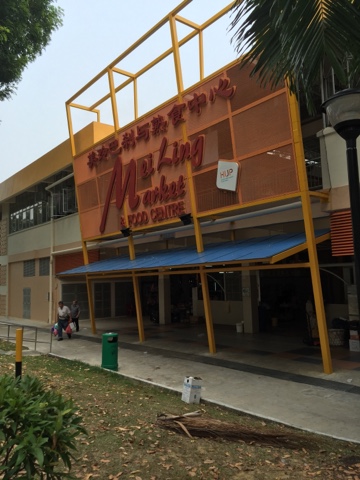
Though Mei Ling Street appeared in maps around the late 1960s, the earliest reference to the market I could find was in the 1972 street directory. Today though renovated, the market still holds many hallmarks of a market that was built more than 40 years ago.

The Entrance to the Market

Firstly, other than the red emblazoned words at the front of the market, the structure itself looked to have changed little. The windows on the second storey are also those that one would see installed as kitchen windows in HDB blocks of the 1970s.


Natural Lighting Helps to Luminate the Stairwell


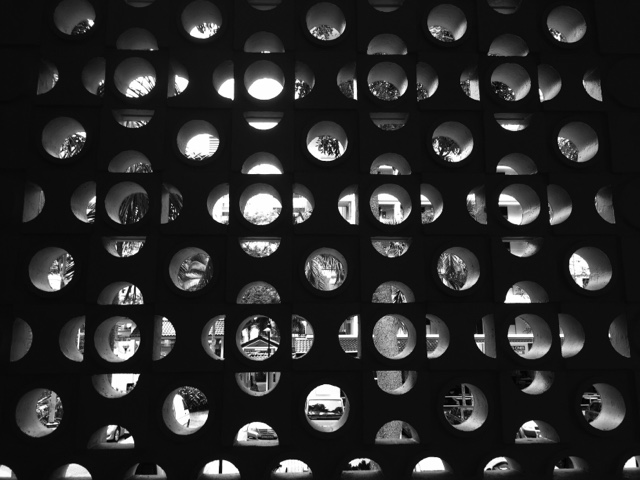
One design that caught my attention was the brick wall of the stairwell. The walls had circles and semi-circles that not only provided natural lighting for the stairwell, the design also gives this market its character.
 
Well Ventilated Food Centre

The market major retrofitting work that was completed in 2009 (The market even has its own escalators) and both the wet market and food centre on the 2nd level have been well refurbished. Interestingly, live chickens were slaughtered in the market up until 1991 when the Environment Ministry laid down the law of not allowing such slaughter to take place. (2)


Trying the Fried Kuey Teow - Tan Song Heng

I know that there are many choices of food that I can choose from at the food centre, but I was just craving for Fried Kuey Teow that day. So a plate of Fried Kuey Teow I had to get. As I'm no food connoisseur, I'll leave the description of food to the expert. In the nutshell, the Fried Kuey Teow was just alright.

I heard that the chicken rice, lor mee and prawn noodles are worth a go. Any other recommendations?


References

1. One Map. http://hm.onemap.sg/ Accessed on September 28, 2015.

2. Poultry seller at Mei Ling Street want an area to slaughter fowl. October 8, 1991. The Straits Times. P. 23.