Sunday, November 1, 2015

[Singapore Parks] Punggol Park - A Park for Three Generations


Weather-beaten Cement Signage

Singapore knows fresh air when they smell it. So with clear weather and haze-free air, people of all ages started to throng the parks. This was no different for Punggol Park that I'd visited earlier. The park is located in an extremely tranquil location - lock in between two rivers - Sungei Pinang and Sungei Serangoon. Both of which have been relocated and in the case of Sungei Pinang, straightened.

Sungei Pinang
In the past, Sungei Pinang was a meandering river that patter out near Jalan Payoh Lai while the other led towards Sungei Serangoon, the lifeblood of fishermen for close to 100 years. Previously, there was a road called Lorong Santun that appeared in the 1966 street directory. It was here that ships and barges were built illegally. (1) This road has now be taken over by the park.


Punggol Park Pond
 
Looking Towards the Pond

The key landmark of this 16 hectare Punggol Park is the 5-ha pond. The running path hugs the perimeter of the pond and this makes it an extremely pleasant running experience. Other times, I would see anglers trying their luck on getting a catch. (2)


What Else Can You Do?

Elderly Folks Learning Taichi

For me, I'd say people watch! I completed my run. In truth, I just stopped in my tracks as there was much to see. I spotted a group of elderly drawing their swords. No, there wasn't any fights. They were practicing their sword play, which is part of their Taichi routine. All poised and elegant. Their moves were immaculate. There is also a Woodball Lawn, a game played largely by the elderly.

Children Screaming Their Hearts Out

I was beyond mesmerised now and had long given up my jog. Just slightly away from the pond was the children's playground. Thus, the park does not just cater to the joggers and taichi practitioners. It's also where children can come out to play. The slides, swings, climbing poles and the likes to keep the kids entertained.

Other than these, there's also a restaurant where you can have a decent meal and a bicycle rental shop where you can pick up a wide range of bicycles.


About the Park

The spire of the Church of the Nativity of the Blessed Virgin Mary could be seen in the distance

First mooted in 1992, the S$4 million park provides residents with a retreat from their busy lifestyles. (3) Dr Michael Lim, the former Minister of Parliament of Cheng San Group Representative Constituency opened the park in 1994. (4)

One of the reasons for naming the park Punggol was because the start of old Punggol Road was located just at the junction of the church. That stretch of road is now called Hougang Avenue 8.


References

1. The Straits Times. October 16 1979.Where building of vessels is illegal. P.13.
2. National Parks. October 8, 2015. Accessed on November 1, 2015. https://www.nparks.gov.sg/gardens-parks-and-nature/parks-and-nature-reserves/punggol-park
3. The Straits Times. November 27, 1992. Hougang to build $4m park for all in the family. P.33.
4. The Straits Times. November 20, 1994. Cheng San residents get park with fishing pond. P.26.

Sunday, October 25, 2015

[Singapore Islands] Pulau Ubin: Tranquil Island


Pulau Ubin - An island that is a stone-throw away from Singapore's mainland but it is so different in every way. Stepping onto the island seems to zap you into history. Nature, houses on stilts, tall coconut trees. All of which are not commonly seen on the island of Singapore.

I'd wanted to bring my family to Pulau Ubin over the weekend but the rain scuppered our plans. Also, I'd wanted to see how we can spend the least amount of money while gaining maximum enjoyment.

We started off from the Changi Point Ferry Terminal. In the past, we just waited at the pier the boatman would just call out to you to board his bumboat. Unlike now, there was no police checks or scanners. We just climb across adjoining bumboats to get to the one that was departing for Pulau Ubin.


The cost of the bumboat ride was S$2.50 per pax. It does not matter if my son was just 2 years old, as long as he can crawl, they will charge. Fair dinkum I'd say. The kids enjoyed the bumboat ride to Pulau Ubin.


It took us merely 30 minutes to get to Pulau Ubin and off we went for our walk. We took in the sights of the the Sensory Trail where different plants are grown along the trail. We even saw a well. Something that we in Singapore do not get to see anymore.


Before we head back to our beloved little red dot, we chose to fill our stomachs with some island food. So off to Pulau Ubin Seafood Restaurant we went.


Nothing fancy, we had fried rice, hor fun, a plate of vegetable and kampong chicken. All in all, we spent less than $60 for the entire trip. Good family bonding; Good value!

First published on November 30, 2011. 

Sunday, October 11, 2015

[Hong Kong Heritage] Ping Shan Trail

Calm Before the Storm
Landing in Hong Kong!
I'm here in Kong Kong and it's great to be able to continue my walking trail in this bustling metropolis. 
This is my sixth trip to this Special Administered Region (SAR) but by far the most interesting one as I had the opportunity to achieve many 'firsts' on this trip and the first amongst which started with my flight into Hong Kong. As our Airbus A380 started it's descent, the aircraft started to rock. The pilot voice crackled over the public announcement informing us that there would be a series of turbulence. The aircraft took a beating and only landed after one failed attempt.

Only when I exited the departure hall that I found out that the aircraft was battered by gale wind from Typhoon Mujigae. I've truly never felt such turbulence and for such a long period of time. Anyway, what's more important is that the skillful Singapore Airlines pilots did well in landing the aircraft.


Visiting New Territories

Rental flats in Fu Tai Estate

Previously, the lure of the fast-paced life in Hong Kong saw me staying and travelling in and around Kowloon or Hong Kong Island. But for this 12-day trip, I'd spent most of my time in New Territories close to Fu Tai Estate.


Ping Shan Heritage Trail

Tsui Shing Lau Pagoda

 I was most excited to do this trail as this was Hong Kong's very first Heritage Trail that the Antiquities and Monuments Office and the Architectural Services Department had put together in 1993. First stop - Tsui Shing Lau Pagoda. This more than 500 year-old pagoda is the oldest in Hong Kong. (1) It's said that scholars once walked around the Pagoda seven times clockwise so that they could ace their examinations. 


Sheung Cheung Wai Walled Village

Next up, a 200-year old walled village. The walls coupled with a moat that has since been covered, provided residents a good protection from their enemies. (2) The guide was able to show us what was previously holes in the wall. Those were used by the defenders to point their weapons at the enemy. There were other historical buildings such as the old well, Yeung Hau Temple, Tang Ancestral Hall and many more for visitors to explore.

View from The Hilltop Visitor Centre

We ended our tour at the Heritage Trail Visitor Centre. The building, perched up on the hill, was once a British police station that was constructed in 1899. The building houses a number of historical and cultural artifacts that showcased what Ping Shan was like in the past.


Doors that lead visitors into the visitor centre

What was most inviting about the visitor centre after more than an hour walk in rainy and humid weather was the air-conditioning in the building. Well, such weather in Hong Kong is a first for me too as all my other visits were in December and where the temperature stayed a cool 17-23 degrees celsius. Still, this trip was extremely beneficial for me as I saw a side of Hong Kong that I'd previously not seen.


References

1. Discover Hong Kong. Accessed on October 25, 2015. http://www.discoverhongkong.com/seasia/see-do/culture-heritage/historical-sites/chinese/ping-shan-heritage-trail.jsp

2. Antiquities and Monuments Office and the Architectural Services Department. Accessed on October 25, 2015.  http://www.amo.gov.hk/en/trails_pingshan1.php?tid=2

Sunday, October 4, 2015

[Singapore Food] Mei Ling Market & Food Centre

A Road Sign Pointing Customers towards the Market
This is no air-condition food centre, but all the same. People are willing to come from all over the island to have a meal at this food centre, me included. As I'm not a frequent customer at this food centre, signs like what you see in the above picture helped me to get to the market easily.


Mei Ling Market Appeared in the 1972 map (1)
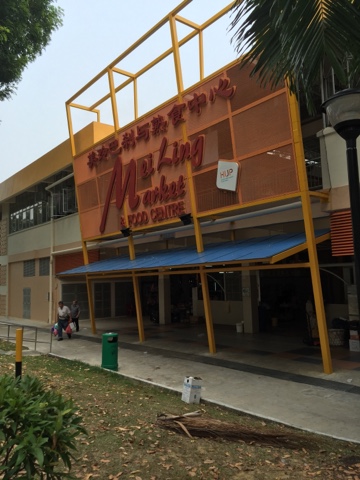
Though Mei Ling Street appeared in maps around the late 1960s, the earliest reference to the market I could find was in the 1972 street directory. Today though renovated, the market still holds many hallmarks of a market that was built more than 40 years ago.

The Entrance to the Market

Firstly, other than the red emblazoned words at the front of the market, the structure itself looked to have changed little. The windows on the second storey are also those that one would see installed as kitchen windows in HDB blocks of the 1970s.


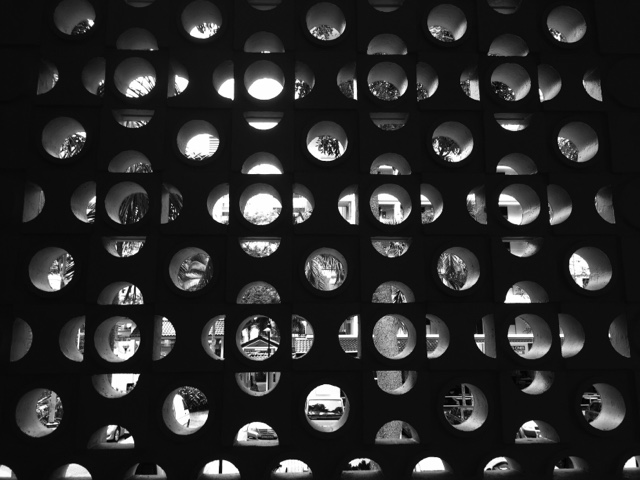
Natural Lighting Helps to Luminate the Stairwell


One design that caught my attention was the brick wall of the stairwell. The walls had circles and semi-circles that not only provided natural lighting for the stairwell, the design also gives this market its character.
 
Well Ventilated Food Centre

The market major retrofitting work that was completed in 2009 (The market even has its own escalators) and both the wet market and food centre on the 2nd level have been well refurbished. Interestingly, live chickens were slaughtered in the market up until 1991 when the Environment Ministry laid down the law of not allowing such slaughter to take place. (2)


Trying the Fried Kuey Teow - Tan Song Heng

I know that there are many choices of food that I can choose from at the food centre, but I was just craving for Fried Kuey Teow that day. So a plate of Fried Kuey Teow I had to get. As I'm no food connoisseur, I'll leave the description of food to the expert. In the nutshell, the Fried Kuey Teow was just alright.

I heard that the chicken rice, lor mee and prawn noodles are worth a go. Any other recommendations?


References

1. One Map. http://hm.onemap.sg/ Accessed on September 28, 2015.

2. Poultry seller at Mei Ling Street want an area to slaughter fowl. October 8, 1991. The Straits Times. P. 23.

Sunday, September 27, 2015

[Buildings] Blk 74-80, Commonwealth Drive

Emptied Blocks of Flats
Sound of Silence. If anywhere in Singapore comes close to a ghost town, it would be the seven blocks of Commonwealth Drive. These Housing Development Board (HDB) flats are slated to be torn down in October 2015. It was not like that.

Looking at Heritage Blogger James Seah's post about this place, this place was once full of life. It had life. There was a spritely dame of a coffeeshop, and a kindergarten with nice wall paintings. Sundry shops, hairdresser and hardware shop were all located under these blocks. Indeed it was convenient for the residents there.

A Towering HDB Block in the Background
With the booming population that we see locally, none of these 10-storey blocks will be able to meet the need. It's all about building it upwards. In a nutshell, we cannot stop progress, but we can immortalise some of these scenes through photographs. I'd taken more than 100 photos but I'd like to just share three photographs that I feel, are most meaningful to me. 

1. Old-School Mosaic Tiles

Mosaic Tiles Seen at Blk 74
I started my walk at Blk 74 and was immediately greeted by this beautifully-laid mosaic tiles. Such tiles are really a throwback into time as nowadays, no one will lay mosaic tiles in such a manner. Many will not even use these tiles unless home owners are planning to create a nostalgic feel within their homes.

2. Ground-Floor Kindergarten
Bright Painting Marks this Kindergarten

In its earlier years, Commonwealth Drive had a growing number of young families. Back in those kampung days, it would have been quite an effort sending the child to school and back as educational institutions were located centrally so that everyone would have access to schools. Things started to change in the 70s. Kindergartens were now located under the HDB blocks.

I can just imagine the crackling of children's voices as they learn to read and also, play. Looking at the louvered metal-windows, I can also imagine myself as an excited parent just hoping to meet the eyes of my child. I would have mustered a peep through the windows just to see if my child is doing alright.

3. Letter-Boxes

Row after Row of Letter-Boxes
 These were the HDB letter boxes that quite a number of us are accustomed to. This is how we open our letter-box. There's a circular hook that allows you to put in your own padlock if you so choose to do so. If not, you'd just need to flip the centre lock upwards. Then insert your key to open the letter box.

One other interesting thing to note about the mailbox. The centre flap bears the unit number of your house. If you're staying on the first level and your home address is 777, then it would just be listed as 777. But if you were staying the second level, then your unit number would be 777-A, and third level 777-B. In the late 1970s, the government must have felt that it was difficult for some people and thus implemented 01-777, 02-777. The new format for address can be seen riveted on the top right corner of each letter box.


What an Interesting Find!
In the midst of letter-box gawking, I chanced upon this letter dated 1980. That is a 35-year old letter. The envelope looked pristine in its condition, though the transparent plastic that one could then see our names, had totally disintegrated. The inside document was also tearing, but one could still make up the gist of the letter. How did this letter go missing for such a long time. Also,  how did it largely survive the test of time.

Sunday, September 20, 2015

[Reservoir] Upper Seletar Reservoir


After finishing my night shift duties of my last reservist in 2013, I was driving home when I chanced upon this place called Upper Seletar Reservoir. Since time was on my side, I stopped my car and walked towards the reservoir. There was very little frontage for anyone to have a picnic or for cycling. But it was good for those who just need that quiet time.

The place was pretty much devoid of people.

A little history about this reservoir. 

The construction of the Seletar Reservoir started in 1921 and was abandoned by the end of that year, as stated in The Straits Times article dated October 17, 1924.1.  The Seletar reservoir was deemed too expensive to be built  though there were still calls for works to proceed on August 6, 1921. 2 The rush was that there was not enough water for the growing population of Singapore as the supply of water slated to be available from Johore by 1925 was far from possible due to the many delays. 3

Still as early as 1922, the beauty and serenity of the reservoir have started to see visitors coming to the place for excursions. 4.

In 1935, though Seletar Reservoir was still not a full-fledged reservoir, it still helped Singapore tide through a dry spell. 5 and in 1937, the government recognised that there was a need for more water and Seletar Reservoir would help to alleviate the issue. 6

In 1939 that the government decided to make Seletar a permanent reservoir from one that was used a a temporary measure for water storage. The dam "would be raised by about five feet, increasing the capacity of the area four or five times". 7, 8. Completed in 1940, the reservoir could now hold 150 million gallons of water. 15.   

Due to impending war and Japanese spies who might sabotage the water supply, Seletar Reservoir became a prohibited area in October 1941. 9

In 1950, a writer wrote about the three reservoirs in Singapore. He mentioned that Seletar Reservoir was "hardly one of the beauty spots". 10  Interestingly though in 1951, another writer waxed lyrical about the reservoir. 11.

Near Seletar Reservoir, the Ministry of Culture screened free movies at the City Council Quarters to entertain workers who helped manage the reservoir from 1959 onwards. 12. 13. 14. 15.

There was a drought that in 1961 that saw many dead fishes that previously teemed in its pristine waters. 15.
 
With the need to more supply drinking water for the ever growing population, the government forked out $27 million in April 1967 to increase Seletar Reservoir's water storage capacity. 16.

By February 1969, the expansion of the reservoir was finally completed 17 and ready for its Opening Ceremony on 10 August 1969. Princess Alexandra officially opened the reservoir. 16. The Princess was invited here as part of Singapore's 150th anniversary and National Day celebrations. The official programme included a "72-member Methodist Girls School choir and the well-known girls' bag piper". There was also a rowing exhibition by the PUB team and "Koleh sailing by the residents of the Southern Islands". 18.

The reservoir could now hold 5,300 million gallons of water, making it the largest reservoir in Singapore. Part of the development included the valve tower which could be "approached by a six-span foot bridge and is 80 feet high" 16. Located at the reservoir was also a 60 feet viewing tower. 18.

Boat rowing competitions such as the Far East Rowing Regatta  was held at the reservoir in 1970. 19.

First written on January 13, 2013. 


Saturday, September 12, 2015

[Special Edition] Singapore Election 2015 - Big PAP Win

Voting is Compulsory

Singapore Election 2015 is a watershed one this year. Why?

1. More than 2 million Singaporeans have gone to the poll. This is the largest turnout that Singapore has seen in any election. 

2. This is the first time that all constituencies are being contested.

3. Dr Chee Soon Juan, Singapore Democratic Party is participating in his first election since being banned from standing in 2006 and 2011 due to his indiscretions. 

The Final Results?

The People's Action Party (PAP) has garnered a resounding win against the opposition parties. The PAP has won all but one Group Representation Constituencies (GRCs) in Aljunied and one opposition stronghold in Hougang Single Member Constituency (SMC).

This election win allows the PAP to form the government for the next five years. PAP has ruled Singapore since 1959.

Battle in Pasir Ris-Punggol GRC

The internet screamed of unhappiness prior to the General Election. But once the polling booths were opened, the battles seemed to have ended before it had begun. All opposition parties lost by large margins. Is it the SG50 swell of feelings? Or the nationalistic emotions that the nation felt because of the death of our founding father, the late Mr Lee Kuan Yew? The analysis will come from both the incumbent and opposition, I'm sure.

The Strongest Opposition Workers Party Has Also Lost Big
What was suppose to Workers' Party push towards extending their grip turned pear-shaped losing Punggol East SMC that was wrestled over in the 2012 by-election.

Fallen Opposition

The opposition may be down at this point, but I'm sure they will try again in the next election. So for now, congratulations to PAP for retaining power.